
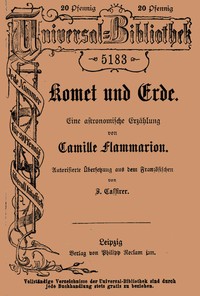
Komet und Erde: Eine astronomische Erzählung by Camille Flammarion
First published in the 1880s, Camille Flammarion's Komet und Erde (Comet and Earth) is a fascinating piece of scientific speculation dressed up as a gripping novel. Flammarion wasn't just a writer; he was a celebrated astronomer, and he uses that expertise to craft a scenario that feels terrifyingly plausible.
The Story
The plot is straightforward but incredibly effective. Astronomers discover a new comet. At first, it's a cause for celebration and scientific curiosity—a new visitor to our solar system. But as they track its path, a horrifying truth emerges. This comet isn't just passing through the neighborhood. Its orbit is on a direct collision course with Earth. The story follows the global reaction to this news. We see the scientific community's frantic calculations and debates, the slow spread of public panic as the truth leaks out, and the various ways societies and individuals prepare (or fail to prepare) for what seems like the end. The comet grows from a speck in a telescope to a looming, fiery presence in the sky, driving the narrative tension right up to the final pages.
Why You Should Read It
What makes this book special is its voice. Flammarion writes with a clear passion for the stars, but he's even more interested in the human heart. He imagines the philosophical and religious crises, the social breakdown, and the poignant personal moments that would unfold. Reading it, you get a real sense of the 19th-century mind grappling with a very modern existential threat. It’s less about flashy special effects and more about the weight of knowledge and the strange beauty of looking your own potential end in the face. The characters serve the idea, but the idea is so powerful it pulls you along.
Final Verdict
This book is perfect for anyone who loves classic science fiction where the science is real and the 'fiction' asks a huge, haunting question. It’s for fans of H.G. Wells or Jules Verne who want to try another visionary from that era. It’s also a great, quick read for someone interested in the history of astronomy and how people of the past imagined cosmic disasters. Don't go in expecting a character-driven epic; go in for a smart, tense, and surprisingly thoughtful ride on a comet's tail. It’s a reminder that some fears—and wonders—are truly timeless.
The copyright for this book has expired, making it public property. It is now common property for all to enjoy.
David Wilson
10 months agoIt’s rare to find such a well-structured narrative nowadays, the formatting on mobile devices is surprisingly crisp and clear. It’s a comprehensive resource that doesn't feel bloated.
Emily Clark
5 months agoSimply put, the clarity of the writing makes this accessible. I couldn't put it down.

Emily Anderson
6 months agoMy first impression was quite positive because the footnotes provide extra depth for those who want to dig deeper. This is a solid reference for both beginners and experts.