
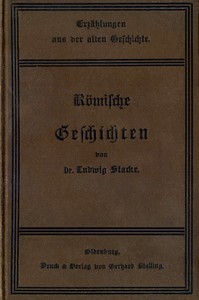
Erzählungen aus der Römischen Geschichte in biographischer Form by L. Stacke
Forget the dusty timelines. Erzählungen aus der Römischen Geschichte in biographischer Form (which translates to Narratives from Roman History in Biographical Form) does exactly what its title promises. Ludwig Stacke, writing in the 19th century, breaks the massive story of Rome into digestible, human-sized pieces. He focuses on key figures, from the legendary founders Romulus and Remus, through the fiery orator Cicero and the ambitious Julius Caesar, all the way to emperors like Augustus and Constantine.
The Story
The book isn't one continuous plot, but a series of connected life stories that, together, form the epic of Rome. You start with myths and early kings, watching a small city-state find its footing. Then, you meet the Republic's heroes and villains—people like the stern Cato and the brilliant but doomed general Scipio. The real tension builds as the Republic starts to crack under the weight of its own success, leading to civil wars. Finally, you enter the age of emperors, a rollercoaster of capable rulers, mad tyrants, and reformers, watching the empire stretch, stabilize, and eventually begin to change from within.
Why You Should Read It
What makes this old book still work is its focus on character. History becomes a series of gripping personal dramas. You understand the Punic Wars better by following Hannibal's gritty determination and Scipio's strategic reply. The fall of the Republic isn't just an idea; it's Caesar crossing the Rubicon, a single man making a decision that shattered 500 years of tradition. Stacke has a knack for highlighting the pivotal moments in a person's life that also became pivotal moments for Western civilization. It reminds you that history is made by flawed, passionate, and often contradictory people.
Final Verdict
This is a perfect pick for someone who finds straight history books intimidating or dull. If you love historical fiction but want to know what really happened, Stacke's biographical approach is a fantastic bridge. It's also great for readers who enjoy personality-driven narratives, like a multi-generational family saga, but on the scale of an empire. Fair warning: it's a 19th-century German text, so the prose can feel formal at times, but the human stories at its heart are timeless. Think of it as a classic, character-driven tour of Rome, with a knowledgeable and thoughtful guide.
This content is free to share and distribute. You can copy, modify, and distribute it freely.
David Hernandez
1 year agoI have to admit, the arguments are well-supported by credible references. I learned so much from this.
Aiden Martin
1 year agoI had low expectations initially, however the flow of the text seems very fluid. I learned so much from this.
Betty Scott
4 months agoJust what I was looking for.



Carol Harris
2 years agoSolid story.